

On This Page
About Mental Health Conditions
Approximately one in four adults experience a mental health condition. The DSM-5, the most recent version of the Diagnostic and Statistical Manual of Mental Disorders (DSM), which is published by the American Psychiatric Association (APA), provides diagnostic criteria for mental health conditions. According to the DSM-5, a mental health condition is:
- a mental disorder is a syndrome characterized by clinically significant disturbance in an individual's cognition, emotion regulation, or behavior that reflects a dysfunction in the psychological, biological, or developmental processes underlying mental functioning. Mental disorders are usually associated with significant distress in social, occupational, or other important activities. An expectable or culturally approved response to a common stressor or loss, such as the death of a loved one, is not a mental disorder. Socially deviant behavior (e.g., political, religious, or sexual) and conflicts that are primarily between the individual and society are not mental disorders unless the deviance or conflict results from a dysfunction in the individual, as described above.
The National Alliance on Mental Illness (NAMI) (n.d.a) defines a mental health condition as:
- a medical condition that disrupt a person's thinking, feeling, mood, ability to relate to others, and daily functioning. Just as diabetes is a disorder of the pancreas, mental illnesses are medical conditions that often result in a diminished capacity for coping with the ordinary demands of life.
JAN receives numerous accommodation questions related to individuals with mental health conditions working successfully. Although there are various definitions and lists of conditions, this document covers those that are received the most by JAN. NAMI provides useful definitions of mental health conditions and statistics on their prevalence. The following (NAMI, n.d.b) is a summary of these:
- Bipolar disorder, sometimes referred to as manic depression, "is a medical illness that causes extreme shifts in mood, energy, and functioning. Bipolar disorder is a chronic and generally life-long condition with recurring episodes of mania and depression that can last from days to months that often begin in adolescence or early adulthood, and occasionally even in children."
- Borderline personality disorder (BPD) is "an often misunderstood, serious mental illness characterized by pervasive instability in moods, interpersonal relationships, self image, and behavior. It is a disorder of emotional dysregulation. This instability often disrupts family and work, long-term planning, and the individual's sense of self-identity."
- Major depression is "persistent and can significantly interfere with an individual's thoughts, behavior, mood, activity, and physical health. Among all medical illnesses, major depression is the leading cause of disability in the United States and many other developed countries."
- Obsessive compulsive disorder (OCD) "occurs when an individual experiences obsessions and compulsions for more than an hour each day, in a way that interferes with his or her life."
- Panic disorder occurs when a person "experiences recurrent panic attacks, at least one of which leads to at least a month of increased anxiety or avoidant behavior. Panic disorder may also be indicated if a person experiences fewer than four panic episodes but has recurrent or constant fears of having another panic attack."
- Post-traumatic stress disorder (PTSD) is "an anxiety disorder that can occur after someone experiences a traumatic event that caused intense fear, helplessness, or horror. While it is common to experience a brief state of anxiety or depression after such occurrences, people with PTSD continually re-experience the traumatic event; avoid individuals, thoughts, or situations associated with the event; and have symptoms of excessive emotions. People with this disorder have these symptoms for longer than one month and cannot function as well as they did before the traumatic event. PTSD symptoms usually appear within three months of the traumatic experience; however, they sometimes occur months or even years later."
- Schizophrenia "often interferes with a person's ability to think clearly; to distinguish reality from fantasy; and to manage emotions, make decisions, and relate to others."
- Seasonal affective disorder (SAD) is "characterized by recurrent episodes of depression – usually in late fall and winter – alternating with periods of normal or high mood the rest of the year." SAD is not regarded as a separate disorder by the DSM-5, but it is an added descriptor for the pattern of depressive episodes in patients with major depression or bipolar disorder.
JAN's Accommodation Solutions: Executive Functioning Deficits is a publication detailing accommodations for individuals with limitations related to executive functioning. These ideas may be helpful in determining accommodations.
Mental Health Conditions and the Americans with Disabilities Act
The ADA does not contain a definitive list of medical conditions that constitute disabilities. Instead, the ADA defines a person with a disability as someone who (1) has a physical or mental impairment that substantially limits one or more "major life activities," (2) has a record of such an impairment, or (3) is regarded as having such an impairment. For more information about how to determine whether a person has a disability under the ADA, see How to Determine Whether a Person Has a Disability under the Americans with Disabilities Act Amendments Act (ADAAA).
Accommodating Employees with Mental Health Conditions
People with mental health conditions may develop some of the limitations discussed below, but seldom develop all of them. Also, the degree of limitation will vary among individuals. Be aware that not all people with mental health conditions will need accommodations to perform their jobs and many others may only need a few accommodations. The following is only a sample of the possibilities available. Numerous other accommodation solutions may exist.
Questions to Consider:
- What limitations is the employee experiencing?
- How do these limitations affect the employee and the employee’s job performance?
- What specific job tasks are problematic as a result of these limitations?
- What accommodations are available to reduce or eliminate these problems? Are all possible resources being used to determine possible accommodations?
- Once accommodations are in place, would it be useful to meet with the employee to evaluate the effectiveness of the accommodations and to determine whether additional accommodations are needed?
- Do supervisory personnel and employees need training?
Key Accommodations:
Managing Panic Attacks: For individuals with mental health conditions, having accommodations to help manage panic attacks can be helpful.
- Flexible Schedule
- Modified Break Schedule
- Rest Area/Private Space
- Support Animal
- Support Person
- Identify and Reduce Triggers
Rest Area/Private Space: An individual may need space to rest, take medication, or perform hygiene associated with activities of daily living. An area reserved as a rest area or private space could be a reasonable accommodation. For example, during or after a seizure, people with epilepsy may exhibit behaviors such as crying, drooling, spitting, or urinating. As a result, the person may need time following a seizure to engage in activities of daily living such as grooming and changing clothes. This type of space might also be helpful to those who have sleep disorders, diabetes, or who struggle with panic attacks.
Identify and Reduce Triggers: Some disabilities or medical conditions may have specific triggers that exacerbate symptoms. If triggers are present in the workplace, it can be helpful to identify what they are and explore accommodations to help. A variety of medical conditions may have associated triggers including migraines, seizure disorders, anxiety/panic disorders, PTSD, and fibromyalgia. The process of identifying triggers is individualized. Common examples are noise, light, and stress.
Accommodation Ideas:
Situations and Solutions:
The following situations and solutions are real-life examples of accommodations that were made by JAN customers. Because accommodations are made on a case-by-case basis, these examples may not be effective for every workplace but give you an idea about the types of accommodations that are possible.

An employee with borderline personality disorder works as a hairstylist in a beauty salon.
At times, she becomes very upset and leaves work abruptly. The supervisor meets with her regarding these occurrences and the employee discloses her disability and explains that because of her work schedule, she has been unable to attend therapy and psychiatrist appointments, which has resulted in an exacerbation of her symptoms. The employer suggests providing her a consistent schedule, allowing her to keep the early part of the day open for her therapist and doctor appointments. The employer also agrees to allow the employee to take two additional unpaid breaks per shift. The accommodations result in the employee getting the treatment she needs, allowing her to continue working successfully in her position.
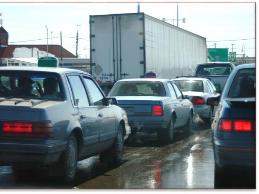
A secretary with PTSD, who had been carjacked several years earlier, experienced significant anxiety during commutes after dark.
This caused difficulty concentrating and irritability. She was accommodated with the ability to have a support animal at work and a flexible schedule with work from home during periods of minimal sunlight.

A guidance counselor for a large high school experienced severe bouts of irritable bowel syndrome, depression, and fatigue as a result of fibromyalgia.
He experienced difficulty in opening the heavy doors to the entrance of the school and had to make frequent trips to the bathroom. The individual's employer complained that he was spending too much of his time away from his office and therefore was not available for students. The employer moved the employee's office to a location closer to the faculty restroom, added an automatic entry system to the main doors, and allowed flexible leave time so the employee could keep appointments with his therapist.

An electrician with severe depression needed to attend periodic licensure trainings.
The person had difficulty taking effective notes and paying attention in the meetings. The individual was accommodated with notes from remote Communication Access Realtime Translation (CART) service.

Lexie is a nurse with PTSD.
She has applied for a nursing position and has been called for an interview. In her last interview that didn’t go very well, she sat across the table in a very small room from four people, the nursing administrator, the personnel director, a nurse manager, and a physician. Lexie feels that if there were no more than two people in the room, she would be able to better represent herself, making her interview more successful. In order to limit the interviewers, Lexie may have to disclose and ask for an accommodation.

A middle school teacher with chronic depression asks for the accommodation of leave one afternoon a week for a sixteen-week period so she can attend an intensive out-patient therapy program recommended by her mental health practitioner.
The physician feels this treatment is necessary to prevent a depressive episode requiring further leave. Her employer finds no hardship in providing her with a substitute for those sixteen afternoons and provides the requested accommodation.

A construction worker had Huntington’s disease related depression.
He requested ADA leave to get treatment and a reduced work schedule when he returned back to work, he was accommodated with leave and a modified schedule.

An employee voluntarily admitted herself to a hospital inpatient unit due to severe depression.
Her mother called the employer to let them know what had happened and to tell them her return date was uncertain at that time. The employer provided leave under the ADA for the employee and requested her mother to keep them informed about the employee’s progress and possible return to work date.

An employer, trying to accommodate an employee returning to work after a leave, had questions about the stress of required travel that escalated the employee’s depression and anxiety.
The employer was advised to continue on in the interactive process to discover what specifically about the travel was stressful so they could determine accommodations for those identified issues. Examples of questions to ask could include what particularly about the travel causes the stress that heightens the depression, such as the length of the travel, the distance, the planning process, or even specific modes of travel and/or locations.

An employee returning to work after a stroke was dealing with depression.
As a result, the employee’s performance was impaired and the previous supervisory method was no longer effective. The supervisor agreed to meet with the employee weekly to discuss performance and conduct issues that were becoming problematic, as well as put accommodations into place. Among the accommodations: a flexible schedule for health care appointments, a diagram to help with the flow of duties, templates to assist in report writing, and a move to an area with more natural lighting.

A customer service representative working in a call center was experiencing limitations associated with generalized anxiety disorder and depression.
He began treatment with a new healthcare provider who adjusted his medications and recommended bi-weekly counseling sessions for one month. He exhausted his accrued paid sick leave but was FMLA eligible. He applied FMLA leave intermittently in order to attend counseling appointments.

A driver with seasonal affective disorder (SAD) who picks up and delivers clients to various appointments began to forget waiting clients as well as the routes she needed to travel in order to deliver them to the appropriate facility.
When her employer mentioned the mistakes, the driver broke down. She described her depression and anxiety with the change of seasons and how it affected her memory. The use of reminder apps, as well as those to help with directions, were discussed as possible accommodation solutions.

A county employee who works in the property records room has bouts of depression that are intensified when he is busy, under deadlines, and has frequent interruptions.
He then finds it difficult to concentrate and get his work completed. The employer rescheduled a part-time worker to help during the busy times, allowing the employee to go to a specified desk behind a partition where he could concentrate more fully on the records he was responsible for.

A veteran with post-traumatic stress disorder (PTSD) was working for state government on a team project.
The employer decided to move the team's office to the basement of a building. Once the move occurred, the veteran realized that the noises in the basement were triggering memories of explosions and causing flare ups of his PTSD. The employer did not want to move the entire team again but was able to find an office on the first floor of the same building for the veteran. The rest of the team remained in the basement, but team meetings were held upstairs.

A graphic designer with a panic disorder experienced recurrent panic attacks when traveling during peak traffic times.
He was required to drop off design orders and pick up print proofs from a print shop when necessary. He was accommodated with a schedule that gave him the opportunity to drop off and pick up materials when coming to work in the morning.
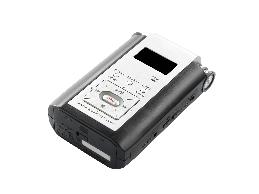
A retail store manager with a psychiatric impairment was inattentive to details, such as identifying keys to lock the various doors of his store.
In addition, he would forget information just after it was told to him. The employer provided a talking key ring. The employer pre-recorded a detailed message identifying what each key was used for. Also, the employer provided a digital recorder that the employee could use to record information told to him throughout the day.

An accountant for a large agency had bipolar disorder.
His duties included research, writing, and filing reports. He had difficulties with concentration and short-term memory during very busy periods that required long hours. He was accommodated with a more consistent caseload that did not result in extreme fluctuations in workload. He was provided a work area that was away from noise and given earbuds to listen to music. He also met briefly with his supervisor once a week to discuss workload issues.

A JAN consultant spoke with an employee with bipolar disorder who had difficulty with short-term memory and concentration.
The employee worked as a secretary in a busy office. The JAN consultant discussed requesting additional training time, written job tasks instructions, daily checklists, and allowing one hour each day to be off the phones to complete job tasks.

An employee with major depression and bipolar disorder was having difficulties working in a busy central banking office.
He needed to manage a large staff of workers, provide customer service, and oversee the daily office management. As an accommodation he requested and received a transfer to a smaller and less busy branch office. The employee maintained his salary and the responsibilities of his leadership role.

A grocery store bagger with seasonable affective disorder (SAD) had difficulty working an early schedule due to oversleeping.
She also experienced fatigue and depression during late fall and winter months. She was accommodated with an afternoon schedule and was moved to the front of the store, which had windows that let sunlight enter her workspace.

A baker with obsessive compulsive disorder (OCD) repeatedly checked ingredients for recipes.
The individual was accommodated with a computerized checklist for each baked good recipe on the menu. He was allowed time in the morning to arrange and check off items to be used during the day. When he felt the urge to recheck the ingredients he could do this quickly by using his daily checklist. This checklist was placed in a handheld computer that resembled the two-way radios used by all employees.
JAN Publications & Articles Regarding Mental Health Conditions
Publications
Consultants' Corner Articles
- A Support Person as an Accommodation
- Accommodating Job-Related Travel
- Accommodations Related to Commuting To and From Work
- Confidentiality of Medical Information under the ADA
- Dealing with Stress in the Workplace
- Disability Awareness Training
- Emotional Support Animals in the Workplace: A Practical Approach
- Getting to Work on Time
- How to Determine Whether a Person Has a Disability under the Americans with Disabilities Act Amendments Act (ADAAA)
Related Disabilities
Articles
- Accommodations Beyond Job Performance = Compliance and Inclusion
- Accommodations for Difficulties with Assisting Others on the Telephone Due to Stress, Anxiety, and Interpersonal Communications
- Cognitive Impairment and the Interactive Process
- Communication Difficulties in the Workplace
- Employees with Mental Health Conditions
- I Understand You Are Stressed...But Aren’t We All?
- Misophonia: Sensitivity to Sounds and Surviving the Workplace
- My Disability Made Me Do It! When It Does and Doesn’t Matter
- Panic Attacks, They Don’t Always Wait Until After Hours
- Phobias in the Workplace
- Return to Work After Hospitalization for Mental Health Treatment
- Self-Employment Options for People with Psychiatric Disabilities: A New Program That Places Lived Experiences and Peer Mentoring at Its Center
- Suicidal Ideation in the Workplace
- Supporting Employees with Mental Health and Cognitive Conditions while Teleworking
Blog Posts
- Dealing with Stress in the Workplace, Part 2
- Coronavirus (COVID-19), Stress, and Mental Health Conditions
- If We Had Known…
- Guest Blog – Website Addresses Addiction and Mental Health Conditions
- Hobby Groups, Workplace Wellness, and Stress Reduction
- Resources for Those Affected by Trauma-Related Disability and LGBTQ Workplace Supports