

On This Page
About Burn Injury
Burn injuries are classified in three ways: first, second, and third degree. First degree burns involve only the top layer of skin and are characterized by pain, redness, and swelling. Second degree burns involve the first and second layer of skin and are characterized by blistering of the skin, redness, and swelling and are very painful. Third degree burns are the most severe and often result in extensive scarring. They can require a long recovery time and may result in severe limitations.
Burn Injury and the Americans with Disabilities Act
The ADA does not contain a definitive list of medical conditions that constitute disabilities. Instead, the ADA defines a person with a disability as someone who (1) has a physical or mental impairment that substantially limits one or more "major life activities," (2) has a record of such an impairment, or (3) is regarded as having such an impairment. For more information about how to determine whether a person has a disability under the ADA, see How to Determine Whether a Person Has a Disability under the Americans with Disabilities Act Amendments Act (ADAAA).
Accommodating Employees with Burn Injury
People with burn injuries may develop some of the limitations discussed below, but seldom develop all of them. Also, the degree of limitation will vary among individuals. Be aware that not all people with burn injuries will need accommodations to perform their jobs and many others may only need a few accommodations. The following is only a sample of the possibilities available. Numerous other accommodation solutions may exist.
Questions to Consider:
- What limitations is the employee experiencing?
- How do these limitations affect the employee and the employee’s job performance?
- What specific job tasks are problematic as a result of these limitations?
- What accommodations are available to reduce or eliminate these problems? Are all possible resources being used to determine possible accommodations?
- Once accommodations are in place, would it be useful to meet with the employee to evaluate the effectiveness of the accommodations and to determine whether additional accommodations are needed?
- Do supervisory personnel and employees need training?
Key Accommodations
- Limiting lifting, reaching, pushing, and pulling by job restructuring
- Using Proper Lifting Techniques
- Reallocating lifting duties, if marginal
- Providing assistance moving objects, to reduce weight
- Organizing items in a way that reduces the need to move or lift items
- Reducing weight to be lifted by separating items into smaller groups
- Reassigning an employee to a modified duty position or modifying duties by removing the lifting duties
- Periodic rest breaks to get up and move around
- Modified break schedule so that you can stretch your legs when needed
- Using break reminder software to remember to get-up and move around
- Alternating between sitting and standing while working by using a sit/stand workstation
- Ergonomic/adjustable office chair
- Work at home, where employee can lie down, sit, stand, move freely
Accommodation Ideas:
Situations and Solutions:
The following situations and solutions are real-life examples of accommodations that were made by JAN customers. Because accommodations are made on a case-by-case basis, these examples may not be effective for every workplace but give you an idea about the types of accommodations that are possible.

A security guard with breast cancer was burned from radiation treatment.
She had difficulty wearing the polyester uniform with embroidered insignia that was required by company policy. The employer modified the dress code policy by having a uniform made of cotton material with the logo and employee name added with a no-sew iron-on adhesive.

A consultant employed by a federal agency had severe limitations in fine motor movements as a result of burns to her hands.
She had difficulty typing for long periods of time. An articulating keyboard tray was added to her desk, allowing her to bring the keyboard closer to her body. She was also given a split keyboard and a trackball mouse that allowed her to use her fingers to move the cursor and type, eliminating the need for her to use her thumbs. The individual combined these devices with speech recognition.

A heating/cooling technician had a burn injury on his waist and chest from a service connected injury.
He had difficulty wearing the polyester uniform required by his employer. His employer had uniforms custom made for him out of cotton.
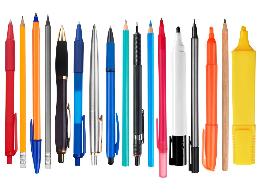
A school teacher with burn injuries to both hands was having trouble writing.
JAN provided information on assistive writing aids such as pen/pencil/marker grips and devices to make holding a pen/pencil/marker easier.

A maintenance worker with a burn injury had difficulty walking and standing for long periods.
The employer purchased a small utility vehicle for the individual to move about the production facility.
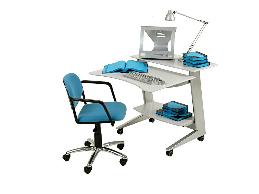
A drafting engineer had third degree burns to 80% of his body.
He was limited in sitting for extended periods. He was accommodated with an ergonomic workstation, including a sit/stand work station.

A person employed as a ground maintenance laborer was recovering from severe burns of his head, neck, and back.
His job required him to work outside during most of the day. Due to the scars he was unable to sweat to cool his body temperature, and he was concerned about getting sunburned. His employer provided him with a hat, long sleeved light cotton shirts, and a cool vest. The employer also changed his schedule to an earlier start time so that he could work mainly during the morning hours during extreme heat.
JAN Publications & Articles Regarding Burn Injury
Publications
Consultants' Corner Articles
Related Disabilities
Articles
- No Articles available for Burn Injury